 Türkçe
  English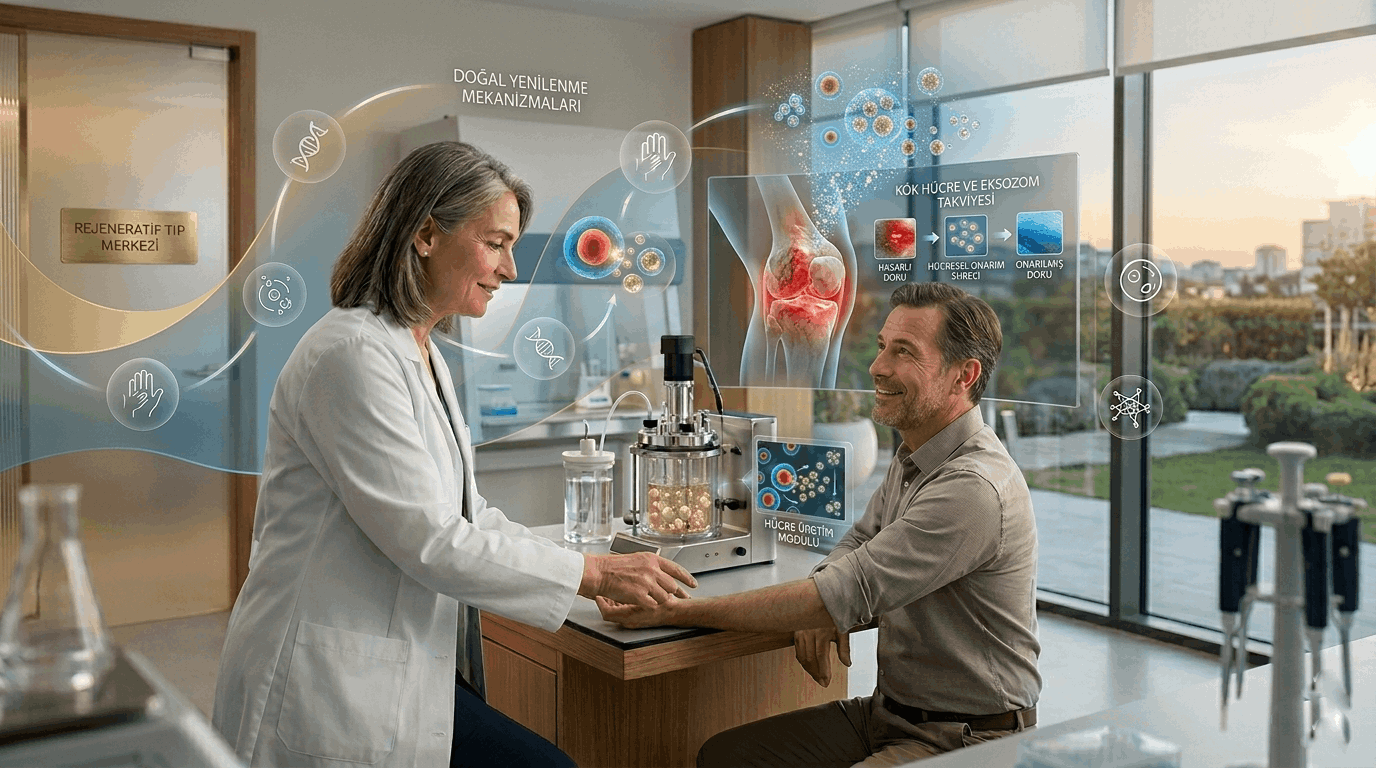
Regenerative Medicine Applications
- What is Regenerative Medicine?
- Stem Cell Therapies and Clinical Applications
- Autologous Stem Cell Applications: Adipose Tissue and Bone Marrow-Derived Regeneration
- The Role of Stem Cells in Regenerative Medicine: Tissue and Organ Repair
- Exosome Therapy: Intercellular Signaling and Next-Generation Regeneration
- Orthobiological Approaches: Musculoskeletal, Joint and Skeletal System Regeneration
- Regenerative Solutions for Knee Arthritis and Cartilage Damage
- Rapid Recovery in Sports Injuries: PRP, PRGF, and Autologous Cytokine Therapies
- Neuro-Regeneration: Strategies to Protect Brain Cells and Nerve Tissue
- Advanced Technologies in Regenerative Medicine: Gene Therapy and Epigenetic Modulation
- Transcription Factors and Cellular Programming
- Mitochondrial Regeneration: Resetting the Cell's Power Plants
- Dr. Ferit Arğun Clinic: Bio-Longevity-Focused Regenerative Protocols
- Personalized Bio-Targeting: Preparing the Body Before Treatment
- Ultrasound-Guided Precision Injection Techniques and Follow-up Process
- Frequently Asked Questions
The modern medical world has transitioned from a model that only suppresses the symptoms of diseases to a period that restores the lost functions of the body at the cellular level.
Regenerative Medicine applications offered at Dr. Ferit Arğun clinic redefine the concept of “healing” by using the latest possibilities of biotechnology.
What is Regenerative Medicine?
Traditional medicine approaches often focus on managing chronic diseases with medications or patching damaged areas through surgical interventions.
Regenerative Medicine, on the other hand, targets the root cause of the disease, not the symptoms.
In cases characterized by cell depletion, tissue loss or organ damage; It aims to “rebuild” the damaged area instead of “repairing” it by using biological materials. This is a transition from a passive treatment to an active biological restoration.
The Body’s Self-Healing Potential
The human body has an enormous repair mechanism that renews millions of cells at any time.
However, aging, chronic inflammation and environmental toxins dull this “natural intelligence”. Regenerative Medicine awakens this blunted healing potential by amplifying the body’s own repair signals.
The aim here is not to impose an artificial substance on the body from the outside, but to direct the body’s own resources (stem cells, growth factors) to the area where they are needed in the most intense and targeted way.
Stem Cell Therapies and Clinical Applications
Stem cells are the “mother cells” of the body and have the ability to transform into different types of tissues (muscle, cartilage, bone, nerve).
Stem cell treatments in Dr. Ferit Arğun clinic; It is used in a wide range of applications, from degenerative joint diseases to neurological protection, to increase the patient’s biological reserve.
Autologous Stem Cell Applications: Adipose Tissue and Bone Marrow-Derived Regeneration
In autologous applications, which is the safest and most ethical method, stem cells are generally obtained from two main sources:
- Adipose Tissue (Adipose): It is very rich in regenerative cells and can be easily obtained by minimally invasive methods.
- Bone Marrow: It contains cells with high potential, especially in bone and cartilage repair. Since the patient’s own cells are used, there is no risk of tissue rejection or side effects; The body quickly incorporates these “familiar” cells into the repair process.
The Role of Stem Cells in Regenerative Medicine: Tissue and Organ Repair
Stem cells not only create new tissue when they reach the damaged area; they also work like factories that send “heal” signals to surrounding cells.
This process plays a key role in restoring tissue integrity, from improving cartilage quality in a calcified knee to functionally strengthening a damaged heart muscle.
Exosome Therapy: Intercellular Signaling and Next-Generation Regeneration
Exosome Therapy, the most exciting and newest link in regenerative medicine, is a method that does not contain cells but carries the “instructions” of the cell.
Exosomes are nano-sized vesicles secreted by stem cells.
- Intercellular Signaling: Exosomes are “smart packages” that carry proteins, RNA, and growth factors between cells. They go to the damaged cell and whisper to it how to repair it and how to stay young.
- New Generation Regeneration: Because they do not contain cells, they are absorbed much faster and penetrate the targeted tissue more easily. Exosome therapy radically shortens recovery time by putting the body’s repair mechanisms into “turbo mode”.
Orthobiological Approaches: Musculoskeletal, Joint and Skeletal System Regeneration
Orthobiology, the most common application area of regenerative medicine, offers alternative or supportive biological solutions to surgery. At Dr. Ferit Arğun clinic, skeletal system injuries are considered not only as a mechanical problem but also as an opportunity for cellular healing.
Regenerative Solutions for Knee Arthritis and Cartilage Damage
Knee arthritis (osteoarthritis) begins when cartilage tissue loses its cellular reserve. While traditional treatments only relieve pain; Stem cell and exosome applications increase the metabolic activity of cartilage tissue. In this way, the narrowing of the joint space is slowed down, tissue quality is improved and the patient’s process leading to prosthesis surgery can be stopped or postponed.
Rapid Recovery in Sports Injuries: PRP, PRGF, and Autologous Cytokine Therapies
Time is the most critical factor in athlete health.
- PRP and PRGF: Tissue healing is accelerated by 3 to 5 times by concentrating growth factors in the blood and delivering them to damaged tendons or connective tissue.
- Sanakin (Autologous Cytokine): It relieves pain and edema naturally by using the body’s own anti-inflammatory proteins.
Neuro-Regeneration: Strategies to Protect Brain Cells and Nerve Tissue
Brain tissue was known as one of the areas with the lowest ability to regenerate. However, modern regenerative medicine breaks this taboo with neurotrafficking factors and exosomes that support neuronal plasticity (the brain’s power to change).
Dr. Ferit Arğun integrates cellular signaling protocols that support nerve tissue into Longevity programs to protect brain health and slow down neurodegeneration (cell loss).
Advanced Technologies in Regenerative Medicine: Gene Therapy and Epigenetic Modulation
The medicine of the future is not just about giving cells, but about changing the genetic expression of the cell.
Transcription Factors and Cellular Programming
Certain genes need to become active for cells to go into “repair” mode. Regenerative therapies affect transcription factors, putting silent recovery genes “on.” It’s like running the rejuvenation software that’s hidden within the body itself.
Mitochondrial Regeneration: Resetting the Cell’s Power Plants
A cell needs energy (ATP) to repair itself. In senescent cells, mitochondria (energy factories) are damaged. Dr. Ferit Arğun’s regenerative protocols optimize mitochondrial health, providing the fuel necessary for the cell’s repair mechanism.
Dr. Ferit Arğun Clinic: Bio-Longevity-Focused Regenerative Protocols
At our boutique clinic in Nisantasi, regenerative medicine is not a standard “needle-making” process. it’s a medical journey led by Dr. Ferit Arğun’s 360-degree perspective.
Personalized Bio-Targeting: Preparing the Body Before Treatment
If you inject even the highest quality stem cells into a body with high inflammation, the chance of success decreases.
Before treatment, Dr. Ferit Arğun optimizes the patient’s microbiota, oxidative stress level and hormonal balance, preparing a “fertile soil” where regenerative products will work with maximum efficiency.
Ultrasound-Guided Precision Injection Techniques and Follow-up Process
The right treatment must reach the right point. All regenerative injections performed in our clinic are performed with imaging techniques (ultrasound) in a targeted manner.
Through a periodic follow-up process after treatment, the response of the tissue is observed and the healing process is optimized.
Frequently Asked Questions
Are regenerative medicine treatments safe?
Since materials obtained from the person’s own blood or tissue (autologous) are used, there is no risk of allergy or rejection. The procedures are performed under sterile clinical conditions under the control of a specialist physician.
Does stem cell therapy replace surgery?
In many cases, it can eliminate the need for surgical intervention or shorten the recovery time after surgery by up to 50%. However, it is used as a supporter in advanced cases where surgery is mandatory.
What is the difference between exosome therapy and stem cell therapy?
While stem cells are living cells, exosomes are nano-packages that carry the healing messages of these cells. Because exosomes are smaller, they cross tissue barriers faster and generally offer more intense signal strength.