 Türkçe
  English
Private Health Check Up

PRE-MARRIAGE SCREENING PACKAGE (EXCLUSIVE FOR COUPLES)
Laboratuvar Tetkikleri (6)
- Hepatitis B
- Hepatitis C
- HIV
- Syphilis
- SMA (Spinal Muscular Atrophy) Carrier Test
- Hemoglobin Electrophoresis (Mediterranean Anemia Screening)
- Blood Type Determination (Rh Incompatibility Check)
MENOPAUSE HEALTH CHECK-UP
Radyolojik Tetkikler (2)
- DEXA (Bone Densitometry)
- Transvaginal Ultrasonography
Laboratuvar Tetkikleri (4)
- FSH
- LH
- Estradiol (E2)
- Lipid Panel
Patolojik Tetkikler (1)
- Liquid-Based (Thin Layer) Pap Smear Test
PROSTATE HEALTH CHECK-UP
Muayeneler (1)
- Urological Examination
Radyolojik Tetkikler (1)
- Urinary System Ultrasound
Laboratuvar Tetkikleri (2)
- PSA
- Free PSA
Ölçüm ve Diğer Tetkikler (1)
- Uroflowmetry (Voiding Test)
BREAST HEALTH CHECK-UP
Muayeneler (1)
- Breast Examination by Specialist Physician
Radyolojik Tetkikler (3)
- Breast Ultrasonography (First choice for young tissue)
- Digital Mammography (Gold standard for over 40)
- Axillary Lymph Node Ultrasound
Ölçüm ve Diğer Tetkikler (-)
- Self-Breast Examination Training at Home
- What Is a Specialized Screening Check-Up Package?
- Who Is Specialized Screening Suitable For?
- Screening Programs Specific to Women
- Screening Programs Specific to Men
- Advanced Age Screening Programs
- What Do Specialized Screening Check-Up Packages Cover?
- How Do You Choose the Right Package?
- Frequently Asked Questions
Specialized Screening Check-Up
While standard check-up programs offer a general health picture, some individuals require a more targeted approach.
Specialized screening check-up packages focus on a specific organ, system, or disease group and offer an in-depth evaluation suited to the person’s risk profile. The goal is not only to detect the current state, but to anticipate future risks and create the opportunity for early intervention.
What Is a Specialized Screening Check-Up Package?
These are focused health screening programs designed for individuals who carry a high risk for certain diseases based on age, gender, genetic predisposition, or lifestyle.
The fundamental difference from general check-up packages is the depth of scope. Rather than superficially scanning all body systems, it examines identified risk areas in detail.
For example, a standard check-up may not be sufficient for a woman with a family history of breast cancer. A specialized package that combines mammography, breast ultrasonography, BRCA gene screening, and gynecological evaluation is much more meaningful for this person.
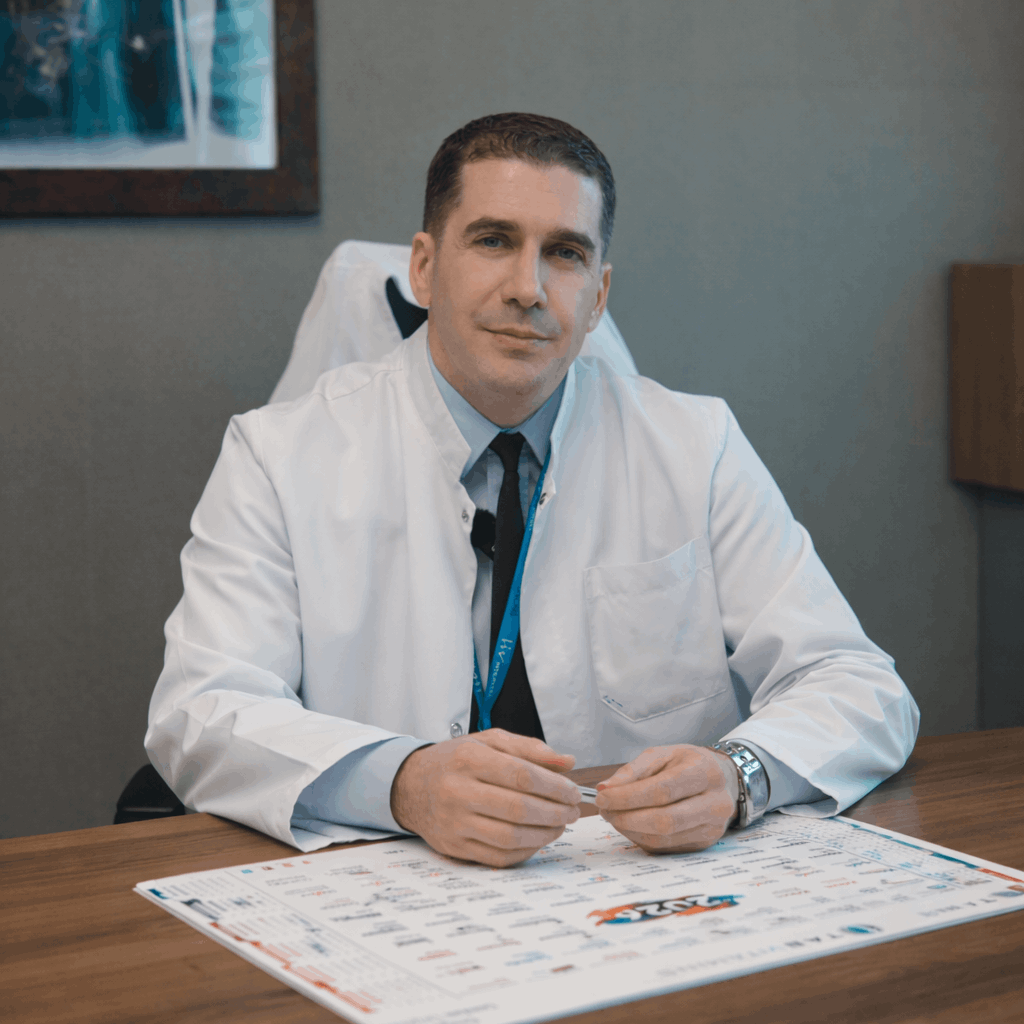
Specialist Dr. Ferit Arğun: “Specialized screening packages reveal pictures that standard check-ups cannot see in individuals with a high risk profile. The true value of these packages lies in applying the right test to the right person at the right time.”
Who Is Specialized Screening Suitable For?
Specialized screening check-up packages are designed for specific risk groups. Individuals who meet the following criteria can primarily benefit from these programs:
- Those with a family history of early-onset heart disease, cancer, or diabetes
- Smokers or alcohol users
- Those working under chronic stress and leading a sedentary lifestyle
- Individuals diagnosed with obesity, hypertension, or insulin resistance
- Women in the pre- and post-menopausal period
- Every individual over the age of 50
- Those with a history of intense environmental or occupational exposure
Screening Programs Specific to Women
Women’s health requires different screening priorities at every stage, from the reproductive period and pregnancy process to menopause and beyond.
Screening programs specific to women may include the following components:
- Mammography and breast ultrasonography
- PAP smear and HPV DNA test (cervical cancer screening)
- Pelvic ultrasonography (ovarian cyst, fibroid screening)
- Bone density measurement (osteoporosis risk)
- Thyroid ultrasonography and hormone profile
- CA 125 tumor marker (ovarian cancer screening)
- Female hormone panel (FSH, LH, estradiol, progesterone)
Specialist Dr. Ferit Arğun: “From the age of 40 onward, every woman needs to make mammography and gynecological screening a routine once a year. Breast and cervical cancer have a much higher treatment success rate when caught at an early stage.”
Screening Programs Specific to Men
In men, cardiovascular diseases, prostate problems, and metabolic disorders are the prominent risk areas.
Screening programs specific to men may include the following components:
- PSA test and transrectal ultrasonography (prostate screening)
- Urological examination
- Comprehensive cardiovascular risk panel
- Testosterone and male hormone profile
- Colon cancer screening (fecal occult blood test, colonoscopy if necessary)
- Carotid Doppler ultrasonography (stroke risk assessment)
- Lung cancer screening (low-dose CT in heavy smokers)
Advanced Age Screening Programs
Screening priorities change for individuals aged 65 and over. During this period, cardiological, neurological, and oncological risks must be evaluated together.
Advanced age screening programs may include the following components:
- Comprehensive cardiological evaluation (ECG, echocardiography, stress test)
- Bone density measurement
- Cognitive function assessment (MMSE test)
- Thyroid functions
- Vision and hearing tests
- Daily living activity assessment
- Comprehensive cancer screening panel
| Age Group | Priority Screening Area | Additional Evaluation |
| 40–50 years | Cardiovascular, breast/prostate | Thyroid, metabolic panel |
| 50–65 years | Colon, lung, bone | Neurological pre-evaluation |
| Over 65 years | Cardiology, neurology, oncology | Cognitive function, hearing |
What Do Specialized Screening Check-Up Packages Cover?
Cancer Screening Programs
Cancer screening aims to detect tumors that have not yet shown symptoms at an early stage. Early diagnosis broadens treatment options and preserves quality of life.
A comprehensive cancer screening package may include:
- Tumor markers (CEA, CA 125, PSA, AFP, CA 19-9)
- Mammography and breast ultrasonography
- PAP smear and HPV DNA test
- Colonoscopy or fecal occult blood test
- Low-dose thorax CT (lung cancer risk)
- Thyroid ultrasonography
- Skin cancer screening (dermatology examination)
Specialist Dr. Ferit Arğun: “Tumor markers alone are not sufficient; they must be supported by imaging methods. The value of a cancer screening package lies in the interpretation of the tests as a whole.”
Cardiology Screening Programs
Heart and vascular diseases are among the leading causes of death in Turkey. Comprehensive cardiological screening is of vital importance for individuals at risk.
A cardiology screening package may include:
- 12-lead ECG
- Echocardiography
- Stress test
- Coronary CT angiography (in required cases)
- Holter monitoring
- Carotid Doppler ultrasonography
- Comprehensive lipid profile and cardiovascular risk calculation
Anonymized Case: A 48-year-old male patient with a family history of early heart attack had a normal standard ECG, but coronary CT angiography performed within the cardiology screening package revealed critical narrowing in two vessels. A potential heart attack was prevented with a timely interventional procedure.
Neurology Screening Programs
Neurological screening covers evaluations aimed at early detection of stroke risk, cognitive decline, and nervous system disorders.
A neurology screening package may include:
- Carotid and vertebral artery Doppler ultrasonography
- Brain MRI imaging (in required cases)
- Cognitive function tests
- Peripheral nervous system evaluation
- Blood pressure and metabolic risk factor monitoring
How Do You Choose the Right Package?
Selection by Age
Each age period has its own unique risk profile. While general screening is sufficient under the age of 40, organ-specific specialized screenings need to come into play after the age of 40.
From the age of 50 onward, colon cancer screening, bone density measurement, and advanced cardiological evaluation should become part of the routine program.
Selection by Gender
The physiological differences between women and men also determine screening priorities.
While the reproductive system and breast health are at the forefront in women, the prostate and cardiovascular system are the priority screening areas in men. For this reason, gender-specific packages offer the most accurate results.
Selection by Risk Factors
Family history, lifestyle, and existing diseases directly shape the content of the package.
- Woman with a family history of breast cancer → Comprehensive breast program including BRCA screening
- Smoker → Lung cancer screening (low-dose CT)
- Family history of early heart attack → Cardiology package including coronary CT angiography
- Individual at risk of diabetes → Insulin resistance, HbA1c, and fundoscopy evaluation
Specialist Dr. Ferit Arğun: “The most reliable way to choose the right package is to have a pre-consultation with an internal medicine specialist. A package chosen without evaluating your risk factors may not meet your actual needs.”
Frequently Asked Questions
What is the difference between a specialized screening check-up package and a standard check-up?
While a standard check-up performs a general body scan, specialized screening packages focus on specific organs or disease groups. For individuals with a high risk profile, specialized screening provides much more meaningful clinical information.
Are these packages covered by SGK?
Comprehensive specialized screening packages are generally outside the scope of SGK coverage. Some private health insurance policies may cover certain screenings; it is recommended that you review the details of your insurance policy.
How frequently should it be done?
Once a year is sufficient for individuals without risk factors. For those with chronic illness or high familial risk, this frequency can be increased upon physician recommendation.
When are the results evaluated?
The majority of laboratory results are completed on the same day. Imaging results are ready within 1–3 business days. All findings are evaluated by a specialist physician and shared with the family.
Is it possible to customize the content of the package?
Yes. Additional tests can be added to the basic packages, or the existing package can be adjusted according to the person’s risk profile. It is recommended that this decision be made under physician supervision.